


How to Choose the Right Paper for Commercial Printing
Paper choice can change the entire feel of a printed item. A brochure printed on glossy stock looks quite different from one with a soft matt finish. Pick up a business card, and the difference becomes even more obvious. Some feel sturdy; others bend too easily.
There is no single paper type that works for every job. Think about what you are printing, where it will be used and how long it needs to last.
Know Your Paper Types
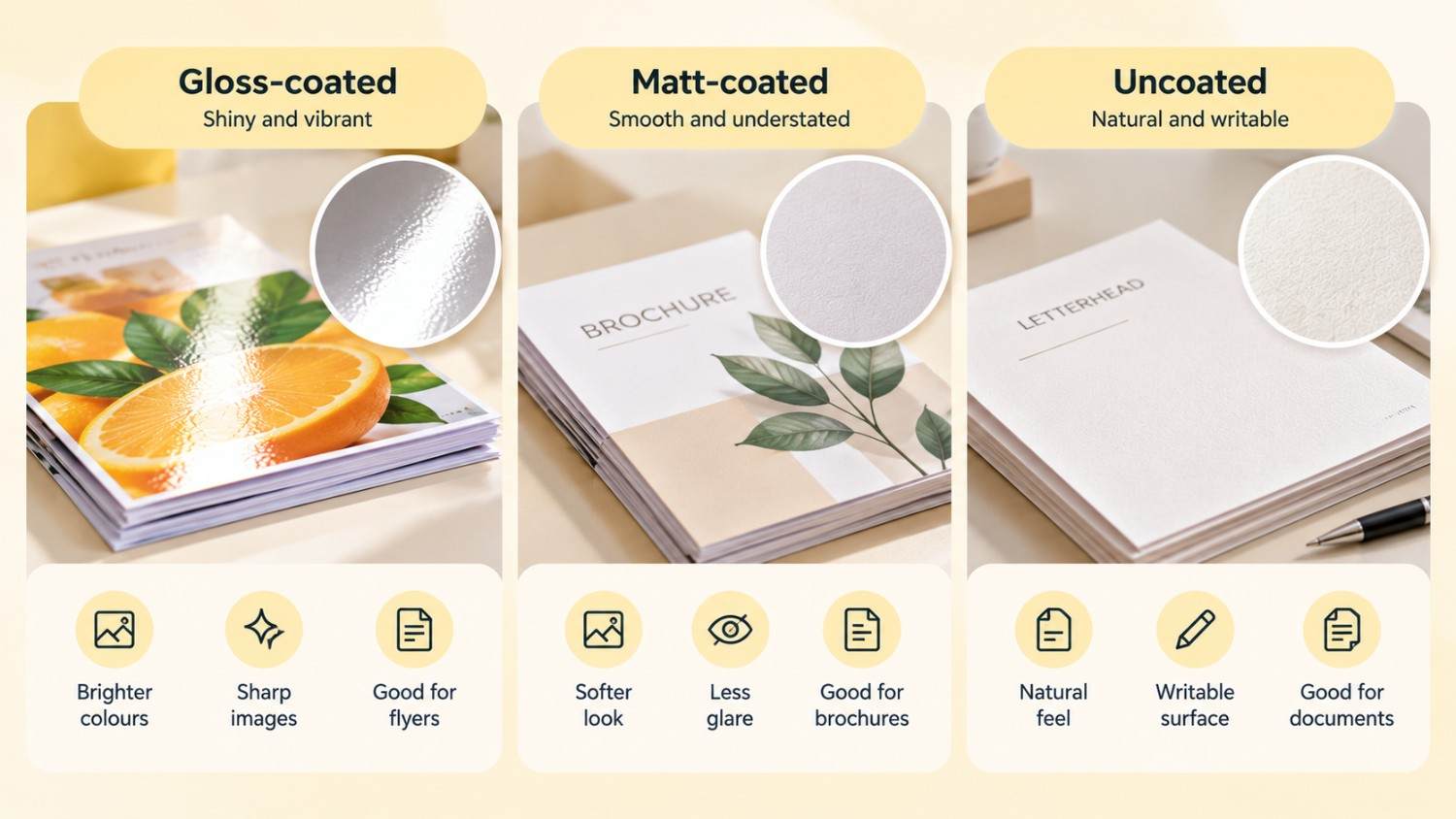
There are many kinds of paper, and each serves its own purpose. Take the surface finish, for example. That changes everything—how ink sits, how crisp your images are, and even how it feels in your hands.
Coated vs. Uncoated
Coated paper has a smooth, treated surface. This boost makes colours pop, and images look crisp. If you want that shiny, polished vibe for, say, flyers or product photos, go with gloss-coated. On the other hand, matt-coated paper is less reflective. It cuts the glare, so things look softer and feel a bit more sophisticated. For brochures containing several pages of text, that can be a more comfortable option.
Uncoated paper has a natural, less polished feel. It is commonly used for letterheads, forms and documents that people need to write on. Photographs may not appear as crisp as they do on coated stock, but that is not always important.
Speciality Paper and Adhesive Materials
Some projects call for something beyond ordinary printing paper. Textured or colored paper adds a unique touch to invitations and presentation materials. When it comes to stickers and product labels, the right adhesive really matters.
Think about how you’ll use your labels—because that changes everything. A paper label sticks just fine to something dry, but if your packaging might get wet, you’ll need something more durable. Always check the adhesive, make sure the material works with your surface, and know how long it should last before you order.
Check Paper Weight and Thickness
Paper weight is measured in grams per square metre, or gsm. A higher number generally indicates heavier paper, although weight alone does not determine thickness or stiffness. Two sheets with the same gsm can feel surprisingly different.
The following table gives a general guide.
|
Paper weight |
Common applications | What to consider |
|
Around 80–100 gsm |
Letterheads and everyday documents | Lightweight and easy to handle |
|
Around 115–150 gsm |
Flyers and folded leaflets |
Flexible, with more body |
| Around 170–200 gsm | Brochure pages and promotional inserts |
Suitable for text and images |
| Around 250–420gsm | Business cards and sturdy covers |
Firmer feel; folding may require scoring |
These ranges are not fixed rules. The paper grade, design and finishing method all affect the final choice.
Thicker paper can make a card feel more substantial, but it may be unsuitable for a leaflet with several folds. It also tends to increase material and delivery costs. If the paper needs folding, ask whether scoring is necessary to reduce cracking along the crease.
Match the Paper to Your Printing Requirements
Before contacting a printing press in Singapore, work out what the finished material needs to do. Will people read it once and discard it? Carry it around? Handle it every day? These questions help narrow down the options.
Brochures and Promotional Materials
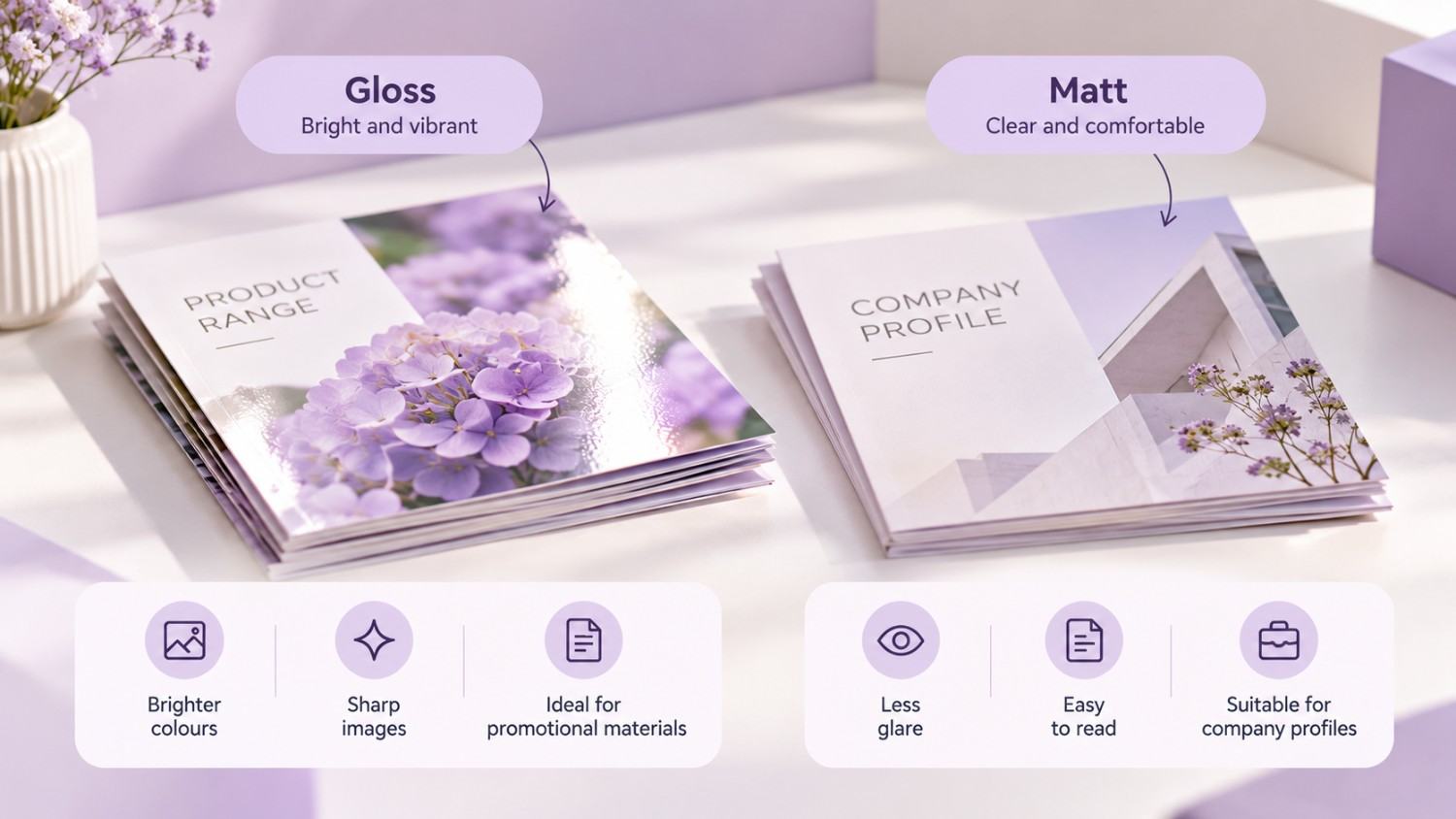
Brochures need a balance between appearance, readability and practicality. Glossy paper really makes photos pop, so it’s great if your brochure is full of colourful product shots. On the other hand, if you’re putting together a company profile with lots of text, matte paper is probably your best bet — it cuts down on glare and feels more comfortable to read.
When you’re shopping around for brochure printing in Singapore, don’t forget to ask about paper weight, finishes, and folding styles. These details matter a lot. A single sheet might work fine for a simple leaflet, but if your design has several panels or pages, you’ll need sturdier paper and different folds.
A few things to remember:
- Go with coated paper if you want sharp photos and bold colours.
- Matte is easier on the eyes for pages packed with text.
- Match the paper weight to your page count and the way you plan to fold the brochure.
- Too thin, and it feels flimsy; too thick, and it might not fold cleanly.
- Physical samples help you judge the finish before ordering.
- Check whether trimming, folding and delivery are included in the price.
A sample is worth requesting for a large print run. It gives you a chance to check the paper before committing to hundreds or thousands of copies.
Business Cards and Visiting Cards
Business cards are handled, carried and sometimes kept for months. Paper that feels flimsy may not give the right impression, but the thickest option is not necessarily the most practical.
For business card printing services, compare the available card stocks and finishes. Matt, gloss and textured surfaces each create a different look. Choose one that suits the design rather than adding a finish simply because it costs more.
The same applies to visiting card printing services. Small text needs to remain readable, and the colours should reproduce properly. If the design is simple, standard card stock may be sufficient.
Stickers and Product Labels
Stickers need more consideration than ordinary paper because both the surface and adhesive affect performance. A label that peels away too easily can cause problems, particularly on product packaging.
When comparing sticker printing services in Singapore, explain where the stickers will be applied. Will they be used indoors, exposed to sunlight or come into contact with moisture? The answers help determine which material is appropriate.
Label printing services in Singapore may offer different adhesive types, paper stocks and finishes. Check the specifications carefully, especially when the labels need to remain attached and legible during storage or handling.
Compare Printing Providers Before Ordering
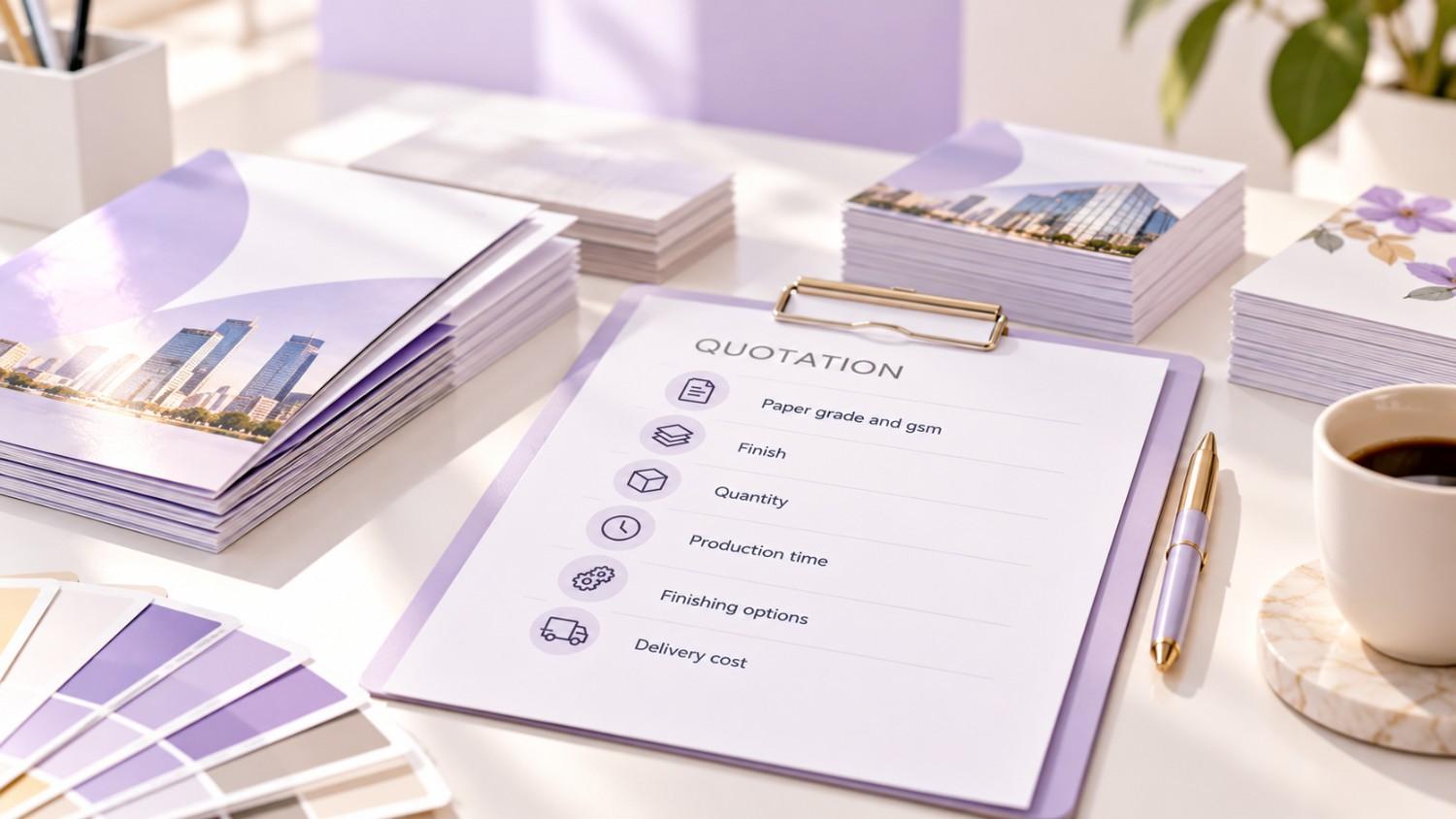
Prices vary between providers, partly because their materials, equipment and finishing options differ. When comparing commercial printing in Singapore, request a detailed quotation rather than relying on the headline price.
Check the paper grade, gsm, finish, quantity and production time. Find out whether lamination, trimming, folding and delivery cost extra. Otherwise, a cheaper quote may turn out to be more expensive once everything is included.
A printing services company should also explain whether your chosen material suits the printing method and finishing requirements. Ask before approving the artwork, not after production has started.
VPublish is one option businesses can consider when reviewing commercial printing requirements.
Make the Final Decision
Start with the purpose of the printed material. A short-lived event flyer rarely needs the same stock as a business card or a product label that must withstand regular handling.
Compare samples, check the specifications and ask about finishing costs. Most importantly, choose paper that suits the design and intended use. Paying extra makes sense when it improves the finished product, not simply because the paper is heavier or the finish sounds more impressive.
About Post Author