


Commercial Printing Paper Types: Which One Should You Choose?
The paper can make a printed brochure feel substantial or leave it looking rather ordinary. A glossy product catalogue, for instance, has a different look from a matt company profile. Neither is necessarily better. It depends on the design, the information being presented and how people will use the finished material.
Before placing an order, consider the paper finish, weight, print quantity and budget. A flyer that will be handed out at an exhibition has different requirements from a brochure that clients may keep for reference.
Understanding Common Paper Types for Commercial Printing
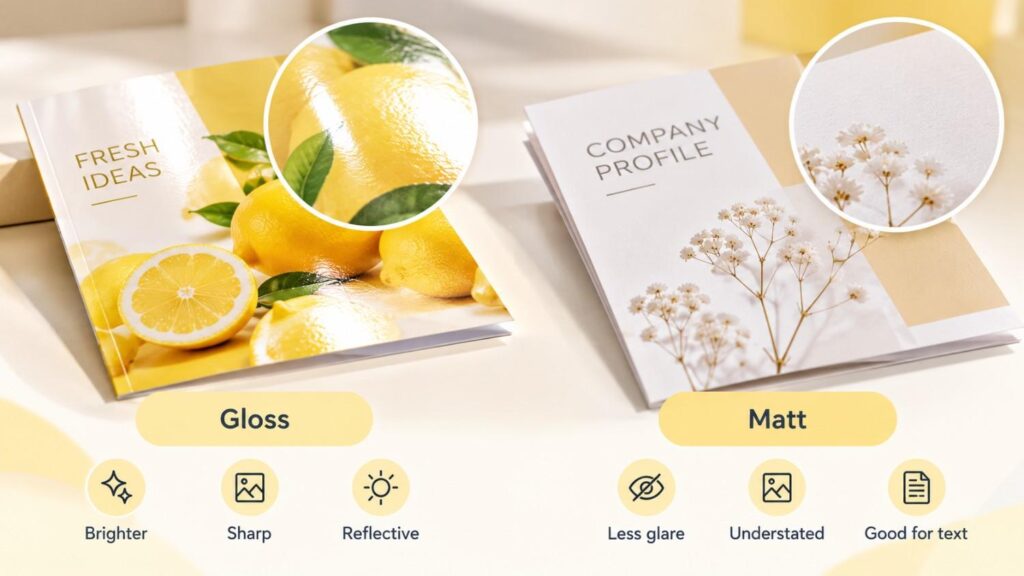
Paper comes in several finishes, and the differences are more noticeable once ink is printed on the surface. Some types bring out colours and photographs, while others have a simpler appearance that suits everyday documents.
Coated Paper: Gloss and Matt Finishes
Gloss-coated paper has a shiny surface. Colours often appear brighter, and photographs look sharp, making it a common choice for product catalogues, promotional leaflets and image-heavy brochures.
There is one drawback. Under bright lighting, the reflective surface can make text harder to read from certain angles.
Matt-coated paper is less reflective. It still reproduces images well, but the finish looks more understated. This can suit company profiles and brochures with plenty of written content.
The choice comes down to the design. A colourful product range might look better on gloss, while a corporate brochure with several pages of text may benefit from matt.
Uncoated Paper for Everyday Documents
Uncoated paper has no additional coating on its surface. It feels more natural and is often easier to write on, which makes it useful for letterheads, forms, notepads and office documents.
Ink absorbs differently into this paper, so photographs and large areas of colour may appear less sharp than they would on coated stock. That is not always a problem. For a form that needs to be completed by hand, ease of writing may matter more than photographic detail.
How Paper Weight Affects the Finished Product
Paper weight is measured in grams per square metre, or gsm. When you see a bigger gsm number, the paper’s heavier; that’s pretty straightforward. But gsm isn’t the full picture. Thick or stiff? That depends on the paper’s grade, not just its weight. You might pick up two sheets with the same gsm and be surprised at how different they feel.
This matters during production, particularly when a printed item needs folding. Lightweight paper may work well for a simple leaflet, but a brochure cover often needs more body.
Matching GSM to Different Print Materials
The ranges below are general guides rather than fixed rules. Paper grade, design and finishing requirements all affect the final choice.
|
Paper weight |
Common applications | What to consider |
|
Around 80–100 gsm |
Letterheads and forms | Lightweight and easy to handle |
|
Around 115–150 gsm |
Flyers and folded leaflets | Flexible, with more body |
| Around 170–200 gsm |
Brochure pages and promotional inserts |
Suitable for many text and image layouts |
| Around 250–300 gsm | Covers, cards and presentation pieces |
Firmer, but may need scoring before folding |
Heavier paper usually costs more and can increase delivery weight. It may also need scoring before folding to reduce cracking along the fold. For a multi-panel leaflet, check that the paper folds cleanly and does not make the finished piece too bulky.
Choosing Between Offset and Digital Printing
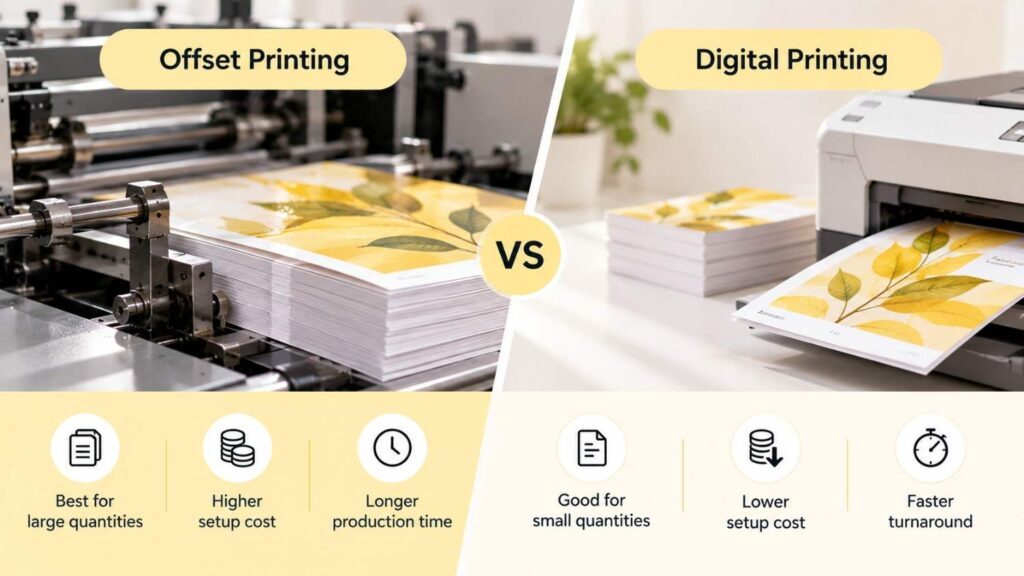
Paper is only part of the decision. The printing method affects setup costs, production time and the options available for the job.
When Commercial Offset Printing Makes Sense
Offset printing uses plates to transfer ink onto a rubber blanket, which then transfers the image to paper. The plates require preparation, adding an initial cost before printing begins.
For a small order, that expense may not be worthwhile. Larger quantities are a different matter because the setup cost is spread across more copies. Commercial offset printing can therefore be a practical choice for bulk orders of magazines, catalogues and brochures.
Digital printing works differently. It does not require conventional printing plates, making it useful for smaller batches, urgent jobs and documents where individual copies need different information.
Neither method is automatically cheaper. Compare the quantity, deadline, paper compatibility and finishing requirements before choosing. A commercial printer in Singapore can walk you through the options. They’ll look at how many prints you need, your timeline, and what kind of finishing you want, then help you figure out which method makes the most sense.
Selecting Paper for Brochure Printing
A brochure needs to look good, but it also needs to work once it leaves the printer. Paper that is too heavy can make a folded leaflet cumbersome. Very lightweight stock, on the other hand, may not provide the substantial feel expected from a presentation brochure.
Businesses arranging brochure printing in Singapore should settle the finished size, page count and folding style before choosing paper. These decisions affect both the material options and the overall cost.
Matching Paper to Your Brochure Design
Start with the content. A short promotional leaflet may be perfectly fine on lightweight coated paper. If you’re making a brochure packed with detailed photos, go for smooth, coated paper; it really brings out the colours and sharpness.
Keep a few things in mind:
- Coated paper shows off photos and colours beautifully.
- Matte finishes make pages easier on the eyes.
- Thick paper looks nice, but if you’re folding it, score it first so it doesn’t crack.
- If your brochures get handled a lot, lamination helps them last.
For exhibitions, lightweight leaflets are often easier to distribute. Client presentations may call for a sturdier cover instead. Ask for paper samples if you are unsure; the feel and finish are difficult to judge on a screen.
Comparing Commercial Printing Services in Singapore
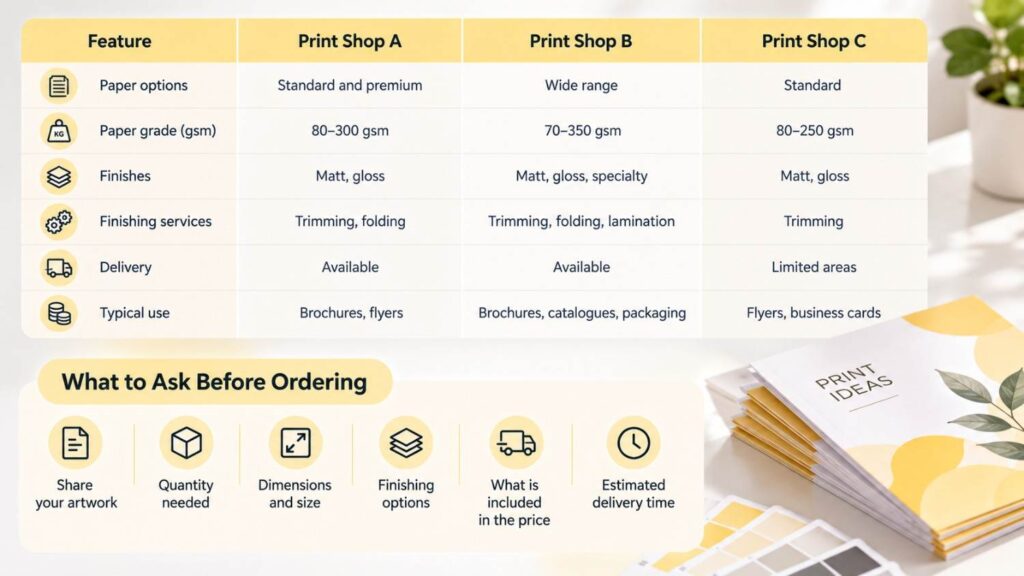
If you’re looking at commercial printing in Singapore, do not simply accept labels like “premium paper” without question. Dig a little deeper, look at things like the paper grade, gsm, and finish. And don’t forget to double-check if things like trimming, folding, lamination, or even delivery come with the quoted price.
What to Ask Before Confirming an Order
Print shops in Singapore don’t all offer the same paper options. A commercial printer in Singapore should be able to explain the available paper options, finishing methods and any additional costs before you confirm the order.
They’ve got different equipment and finishing touches, so you’ll want to give them your artwork, how many copies you need, the dimensions, and your deadline when you ask for a quote.
It’s smart to ask if the paper really matches your design, or if you’ll need any extra finishing steps like scoring. A good printer should walk you through all this before they start working on your order. If you need a place to start, VPublish is one company you can check out for commercial printing.
Making the Final Paper Choice
Pick your paper based on how you’ll actually use the printed materials. If you’re printing flyers for a one-day event, there’s usually no reason to splurge on heavy paper. But for something meant to stick around, like a catalogue, upgrading to a thicker stock makes sense.
If you’re planning to print brochures in Singapore, ask for physical samples, and get quotes based on identical specs. That way, you’ll really know what you’re getting and avoid unpleasant surprises down the road. You want paper that works well with your design, feels right in your hands, and stays within budget. Don’t pay extra for fancy finishes if they don’t add anything you or your customers will notice.
About Post Author